Watching Your New Home's Plumbing Rough-In Take Shape
A walk-through of what a plumbing rough-in actually is, written for the homeowner watching their own house get built.
September 17, 2026 · 3 min read
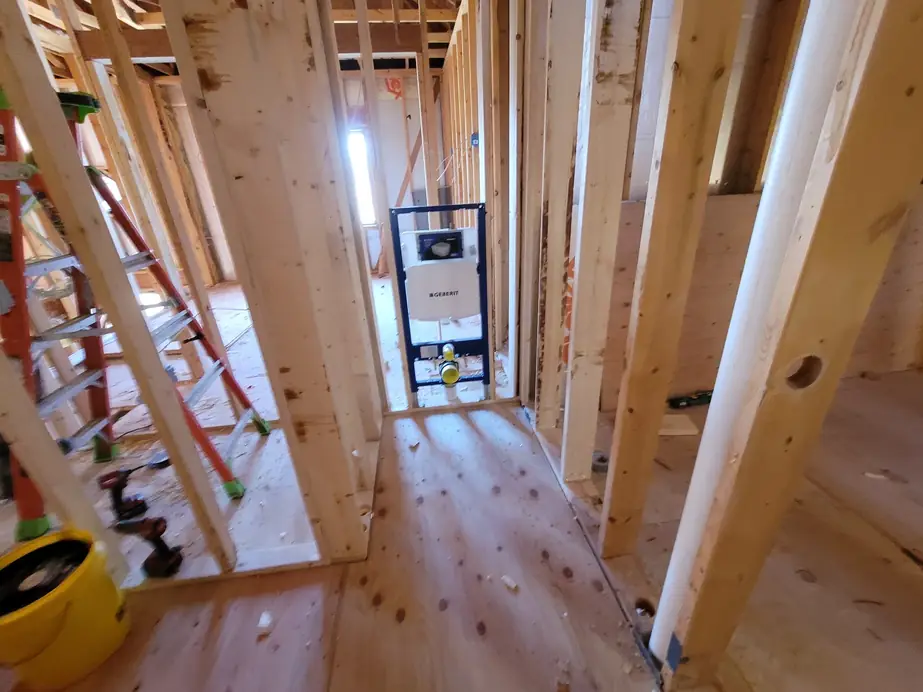
Long before a new house looks anything like a finished home, the plumbing that will run through it for the next fifty years already has to be in place. That stage is called the rough-in, and it happens in the window between framing and drywall, when the walls are still open studs and every drain, vent, and water line can still be seen before it disappears behind gypsum board for good.
Why the Order Matters
Framing goes up first so the plumbing crew knows exactly where walls, floors, and joists will be. Plumbing, electrical, and any ductwork go in next, while everything is still visible and adjustable. Insulation and drywall come after, which is why the rough-in has to be right the first time. Once a wall is closed, fixing a mis-run line means cutting drywall back open, which nobody wants to do on a brand new house.
What Actually Gets Installed
- Drain, waste, and vent piping running from every fixture location to the main stack, sloped correctly so waste flows by gravity.
- Vent stacks that run up through the roof, letting air into the drain system so water can flow without gurgling or siphoning traps dry.
- Water supply lines, often PEX tubing, running from the water heater and main shutoff to every fixture.
- In-wall carriers for wall-hung toilets, which have to be positioned and braced before the wall closes around them.
- Gas piping where the home has a gas water heater, furnace, or range.
- Hose bib lines run to the exterior for outdoor spigots.
What an Inspector Checks Before the Walls Close
A rough-in inspection happens before any of it gets covered up. An inspector looks at whether the drain and vent piping is sized and sloped correctly, whether every fixture has a vent, and whether the water supply system holds pressure without leaking under a test. Getting this signed off before drywall goes up is the whole point of doing it in this order. It is the last chance anyone has to see the actual pipe rather than a wall.
What Can Still Change During Rough-In
A rough-in is also the last practical point to move a fixture. If a homeowner decides a vanity should sit a foot to the left, or a laundry room needs a floor drain that was not on the original plan, this is the window where that change is a matter of moving a stub-out rather than opening a finished wall. Builders walk a new home through with the owner at this stage for exactly that reason. Once drywall and tile are in, the same change becomes a demolition job instead of a plumbing adjustment. The main drain stack itself, usually the largest diameter pipe in the house, sets the layout that every branch line ties into, which is why it gets placed early and everything else works around it rather than the other way around.
Where Karlsen Fits In on a New Build
Karlsen Plumbing works as the plumbing contractor for builders and general contractors on somewhere around 200 new homes a year across Southeast Wisconsin, from custom one-off houses to production and model homes, and on multi-family projects ranging from two-family homes up to larger condo and apartment buildings. The brands that show up most often on these jobs include Kohler and Geberit for in-wall toilet carriers, Bradford White and Rinnai for water heating, Moen, Sterling, Delta, and Grohe fixtures, InSinkErator disposals, and Uponor PEX for the supply lines themselves.
What Happens After Rough-In Passes
Once the rough-in inspection is signed off, insulation and drywall move in and the house starts to look finished from the inside. The plumbing crew comes back later for the trim-out stage: setting toilets, sinks, faucets, and the water heater itself, and connecting everything that was stubbed out during the rough-in to the fixtures a homeowner will actually use every day. Trim-out is also when a punch list gets worked through, checking every fixture for proper operation, testing water pressure at each tap, and confirming nothing was jarred loose while drywall, flooring, and cabinetry went in around the stubbed-out pipe.
If you are a builder or a homeowner working through new construction or a multi-family project in Racine or Southeast Wisconsin, see the new home construction and multi-family plumbing pages, or call Karlsen Plumbing directly at (262) 633-1951.
Karlsen Plumbing, Inc., (262) 633-1951
Call (262) 633-1951More articles
The Ten Minutes After a Pipe Bursts in a Racine Basement
A practical look at where cold-weather pipe failures start in Southeast Wisconsin homes, and how to limit the damage before help arrives.
How to Tell Your Sump Pump's Battery Backup Has Already Failed
What a battery backup actually does, why it tends to fail without warning, and how to check yours before the next power outage does.