The Ten Minutes After a Pipe Bursts in a Racine Basement
A practical look at where cold-weather pipe failures start in Southeast Wisconsin homes, and how to limit the damage before help arrives.
September 17, 2026 · 4 min read
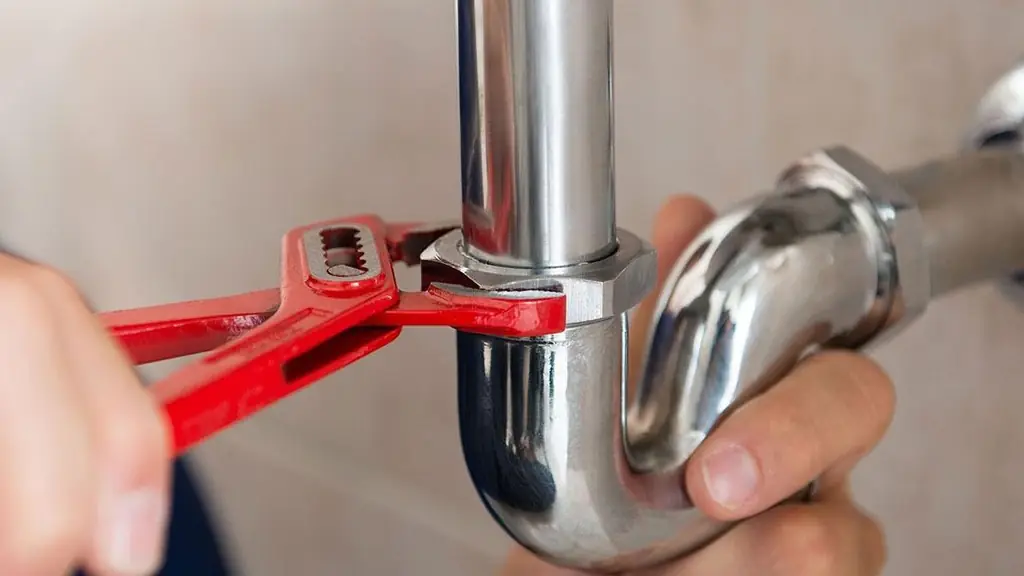
Racine sits close enough to Lake Michigan that a cold snap can swing fast, and the plumbing inside an older house does not always keep up. Every winter, Karlsen Plumbing gets calls that start the same way: a homeowner walks past a wall or a crawlspace hatch and hears dripping, or worse, finds standing water on a basement floor. Knowing where a pipe is likely to fail, and what to do in the minutes after it does, changes how much damage a frozen pipe actually costs.
Where the Cold Gets In First
Pipes rarely freeze in the middle of a heated room. They freeze where the water line runs somewhere the house does not actively heat: an exterior wall with thin or missing insulation, a crawlspace with a loose hatch, an unheated garage, or the stretch of pipe that feeds an outdoor spigot. A lot of Racine's housing stock predates the insulation standards used in new construction today, so a kitchen or bathroom on an exterior wall is often exactly where the cold finds a way to the pipe behind the drywall. Basement pipes near a foundation crack or a drafty window well are a close second.
Why the Failure Happens at the Elbow
Water expands as it freezes, and a closed faucet on one end means that pressure has nowhere to go. The pipe usually does not split where the ice actually forms. It splits at the nearest weak point, which is almost always a fitting rather than a straight run. An elbow has thinner wall material at the bend, fewer threads holding it together than a coupling, and a joint that was already under some stress from the original install. Copper tends to split cleanly along the fitting seam. PEX holds a little longer under the same pressure, which is one reason it shows up in a lot of newer Racine rough-in work, but PEX is not immune once an ice blockage sits long enough.
The Ten Minutes After You Find Water
What you do in the first ten minutes matters more than anything a plumber does after arriving. Move fast, but do these in order.
- Shut off the main water valve. If you do not know where it is, find it now, before you need it, not during an emergency.
- Shut off the water heater's power or gas supply so it does not keep heating water it cannot circulate.
- Open the nearest faucet on that line to relieve pressure and let any remaining ice thaw without building up behind it.
- Move anything valuable off the floor and away from the leak, then start soaking up standing water.
- Call for emergency service. Karlsen Plumbing answers emergency calls and offers 24 hour service for exactly this situation, at (262) 633-1951.
Do not point a heat gun or an open flame at a frozen pipe. It is a fast way to start a fire inside a wall cavity you cannot see into. A hair dryer on a visible, exposed section of pipe is safer, but only if the pipe has not already split.
What a Plumber Does to Thaw a Line Safely
When a line is frozen but has not yet split, the goal is to bring heat to it evenly and from the right direction. A plumber will usually work from the open faucet end back toward the blockage, not from the middle of the frozen section outward, because that gives the melting ice somewhere to go instead of trapping pressure between two plugs of ice. On copper, an electric pipe thawing machine can pass a low voltage current through the pipe itself and melt the blockage from the inside out without an open flame anywhere near the wall. On PEX, that approach does not work the same way, since PEX does not conduct current, so warm towels or a heat wrap along the accessible length of pipe do the job instead. Either way, finding exactly where the ice sits, rather than guessing, is most of the work.
Keeping It From Happening Again
Most of this is preventable with cheap materials and an hour of work before the first hard freeze. Foam pipe insulation sleeves on any exposed line in a crawlspace or garage cost very little and make a real difference. Heat tape does the same job on a line that has frozen before. On the coldest nights, leaving cabinet doors open under a sink on an exterior wall lets warm room air reach the pipe, and a slow trickle from the faucet keeps water moving so it cannot sit still long enough to freeze. None of this fixes a pipe that had a design problem from the original build, like a line run too close to an uninsulated exterior wall, but it buys real margin on an average Wisconsin winter night.
If you are dealing with a frozen or burst pipe anywhere in Southeast Wisconsin, Karlsen Plumbing has answered these calls since 1978 and keeps emergency service available around the clock. Reach the shop at (262) 633-1951, or see the plumbing service and repair page for what a typical service call covers.
Karlsen Plumbing, Inc., (262) 633-1951
Call (262) 633-1951More articles
How to Tell Your Sump Pump's Battery Backup Has Already Failed
What a battery backup actually does, why it tends to fail without warning, and how to check yours before the next power outage does.
The Warning Signs a Water Heater Gives Before It Floods a Basement
The signs a tank water heater gives before it fails, and what changes in a Racine basement when a home switches to tankless.