What a Backflow Preventer Test Actually Involves
What backflow means, where a preventer is typically required, and what happens during the annual test.
September 17, 2026 · 3 min read
A backflow preventer is one of those devices most homeowners never think about until a water utility or an insurance inspector asks about it. It sits quietly in a mechanical room or a pit near the water meter, doing nothing most of the time, and its entire job is to make sure water only ever flows one direction: from the public supply into the building, never the other way.
What Backflow Actually Means
Under normal conditions, municipal water pressure pushes water into a building and that is the end of the story. Certain conditions can reverse that flow. A water main break down the street, a sudden heavy draw for firefighting, or a drop in pressure elsewhere in the system can pull water backward instead of pushing it forward. If a building has what plumbers call a cross connection, a point where potable water lines connect to something like an irrigation system, a boiler, or industrial equipment, that reversed flow can pull whatever is on the other side of that connection back into the drinking water. A backflow preventer is the device that stops it, using check valves that only allow flow in one direction and a relief valve that opens if something goes wrong.
Where a Preventer Is Typically Required
Irrigation systems are one of the most common places a backflow preventer shows up on a residential property, since a sprinkler system connects directly to the same water supply as the kitchen sink. Boilers, commercial equipment, and buildings with a fire sprinkler tied into the domestic water service usually need one too. Most municipal water utilities require an annual test once a device is installed, and the exact requirements vary by property type and by utility, so it is worth checking with whoever supplies your water rather than guessing.
Who Tests It, and Why It Matters Who You Call
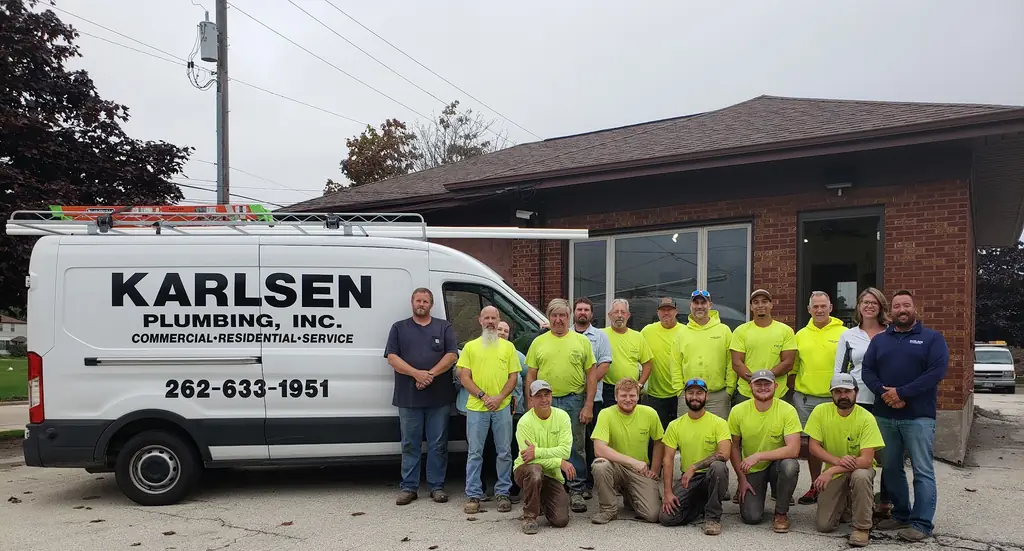
Karlsen Plumbing's technicians are certified in backflow device testing, on top of being licensed by the State of Wisconsin and OSHA certified, and the shop is also certified for medical gas work, which comes up on the health care and institutional jobs Karlsen has done through its commercial plumbing work. Testing a backflow preventer correctly takes calibrated equipment and someone who knows what a passing reading actually looks like on each type of device, not just someone turning a valve and eyeballing it.
What Happens During the Test
- A visual inspection of the device and its shutoff valves for obvious damage, corrosion, or leaks.
- Test gauges are connected to the device's test cocks to measure the pressure differential across each check valve.
- Each check valve has to hold its rated pressure differential without leaking through.
- The relief valve is checked to confirm it opens at the correct pressure rather than staying shut or opening too early.
- The readings are recorded, and a report is typically filed with the water utility that asked for the test.
What Happens If It Fails
A failed test usually means a worn rubber seat or a check valve that will not hold pressure anymore, both repairable without replacing the whole device. Occasionally an older device has reached the point where replacement is the more sensible fix. Either way, a backflow preventer is not something to bypass or ignore once it fails a test. It is the one thing standing between whatever is on the far side of a cross connection and the water coming out of a kitchen tap.
Common Misunderstandings Worth Clearing Up
- A single check valve is not the same thing as a tested backflow preventer. A basic check valve can stick or wear out silently, with nothing to catch a failure.
- Passing a test once at install does not mean the device is good indefinitely. Seats and springs wear with normal use like any mechanical part.
- An irrigation system installed by a landscaper does not automatically come with a properly tested device already in place. It is worth confirming rather than assuming.
- A device that looks fine from the outside can still be failing internally. The only way to know is to actually test it.
Karlsen Plumbing tests and services backflow preventers across Racine and Southeast Wisconsin, for homeowners, builders, and commercial properties alike. Call (262) 633-1951 to get one tested or installed, or see the commercial plumbing page for the kind of work this usually comes up on.
Karlsen Plumbing, Inc., (262) 633-1951
Call (262) 633-1951More articles
The Ten Minutes After a Pipe Bursts in a Racine Basement
A practical look at where cold-weather pipe failures start in Southeast Wisconsin homes, and how to limit the damage before help arrives.
How to Tell Your Sump Pump's Battery Backup Has Already Failed
What a battery backup actually does, why it tends to fail without warning, and how to check yours before the next power outage does.